Insights on digital risk and
personal security

Digital risk is evolving quickly. For individuals and families with greater public presence, professional responsibility, or complex personal lives, digital exposure is often higher. The impact of a security incident can extend beyond inconvenience to affect privacy, reputation, and financial well-being.

Disclaimer icon
The articles below share insights from the Richter Guardian team, including security advisories, real-world case examples, and practical guidance intended for people whose roles, visibility, or circumstances place them at elevated risk.
Insights on digital risk and personal security

Browse by topic

Explore articles based on areas of risk and responsibility.

A secure app showing assets, alerts, and overall risk level

Digital protection tips

Guidance and tips for high-net-worth individuals, executives and their families to stay safe online.

A secure app showing assets, alerts, and overall risk level

Digital executive protection

Articles about identifying, reducing, and fixing cybersecurity and online privacy risks in the personal lives of high-net-worth executives and their families.

A secure app showing assets, alerts, and overall risk level

Security advisories

Covers personal devices, accounts, and online presence.

A secure app showing assets, alerts, and overall risk level

Family and personal risk

Articles with guidance and tips for managing family and personal digital risk.

A secure app showing assets, alerts, and overall risk level

Case studies

Real-world examples that illustrate how digital incidents occur and how they are managed.

Latest articles

New articles and updates from the Richter Guardian team.

Article illustration: Protecting Against Technical Support Fraud

Protecting Against Technical Support Fraud

Tech support fraud remains widespread, with over 30,000 FBI-reported victims in 2022. Learn common tactics—fake calls, pop-ups, remote access—and how to avoid them with Richter Guardian’s help.

Introduction

Cyber criminals have been carrying out technical support scams for over a decade. As technology evolves, so do the techniques of fraudulent tech support scammers, making it difficult for people to discern whether the technical support team they’re speaking to is legitimate. Technical support scams are so common that the FBI’s Internet Crime Report of 2022 reported that ‘Tech Support Crime’ had over 30,000 recorded victims in 2022.  

Summary of a technical support fraud

Technical support scammers use many different techniques to trap people and gain access to their computers and other devices. After they convince you that there is a problem, they request an exorbitant fee in return for their help. Here are two of the most common methods technical support scammers use to trick their victims:

  1. Phone calls, emails and text messages – Technical support scammers may call, email or send a text message and pretend to be a computer technician from Apple, Microsoft, or any well-known technology company. They will assure you that there is a problem with your computer, and request that you give them remote access to your computer to help remediate the issue.
  2. Pop-up warnings – Technical support scammers may trick you with pop-up windows; it may look like an error or warning message from your device, and it may use similar graphics from trusted websites. The pop-up will often provide a phone number that you can call to get help. The phone number will lead to a fraudulent tech support worker.

Recommendations

  1. Stay Informed – Always be skeptical of unsolicited calls, emails or text messages that report a problem with your device.  
  2. Prevent Remote Access – When a technical support scammer has you on the line, they will convince you to provide them remote access to your device in order to run diagnostic tests. Do not provide remote access to your device.  
  3. Trust Your Instincts – If you are suspicious about an unexpected message, call, or request for personal information or money, it is safe to assume it may be a scam.  
  4. Stay Educated – Participate in security awareness sessions provided by your Richter Guardian team, your bank or other trusted organizations.  

We understand that misleading pop-ups or warnings about your device through a call can cause uncertainty. Richter Guardian’s monitoring system and concierge service can give you peace of mind.

Your onboarded mobile and endpoint devices can be monitored by us. If there is a problem with your device, we will contact you to provide specific details about any potential alerts. Our experts can help you remediate the issue.

Ready to stay protected from digital threats, with experienced professionals overseeing your security?

Request a private consultation to find out whether Richter Guardian is a good fit for you.

Article illustration: Travelling and Social Media – How To Keep Safe

Travelling and Social Media – How To Keep Safe

Posting vacation photos in real time can make you a target. We share five tips: private accounts, no travel details, share after you return, and educate kids—plus how Richter Guardian helps secure social accounts.

Introduction​

It’s natural to want to capture the moments from your special vacations and share them on platforms like Facebook and Instagram with family and friends. However, posting these photos while you are still on your trip can expose you to various cybersecurity risks. Cybercriminals often exploit social media to gather information about your travel plans, and by sharing your vacation in real time, you may unknowingly make yourself a target.​​

How to enhance your security on vacation

By following these precautions, you can enjoy your vacation while minimizing the risks associated with social media sharing:

  1. Set Your Account to Private: Restrict access to your personal information by sharing only with people you know. Public settings allow anyone to view your posts, potentially putting you at risk.​
  2. Decline Requests from Unfamiliar Individuals: Be cautious when receiving friend requests from strangers. Unfamiliar profiles might be cybercriminals in disguise, aiming to extract money or steal your identity.​
  3. Avoid Posting Travel Details or Itineraries: Keep your travel arrangements private. Sharing confirmation numbers for hotel reservations, airline tickets, or excursions online can provide cybercriminals with valuable information they can exploit.​
  4. Share Photos After Returning Home: Although it may be tempting to post in real-time, consider waiting until you’re back home. You can still share your vacation highlights, and it’s a safer approach.​
  5. Educate Your Children on Social Media Safety: While you might be aware of how to stay safe online, your children might not. Ensure they understand the importance of secure sharing practices during and after the trip.

Ready to stay protected from digital threats, with experienced professionals overseeing your security?

Request a private consultation to find out whether Richter Guardian is a good fit for you.

Article illustration: Apps and Location Tracking

Apps and Location Tracking: What Are the Consequences?

Apps collect and sell location data—with serious privacy implications. We explain what’s collected, how it’s used (e.g. Tim Hortons), and practical steps to limit tracking on your phone.

Introduction

Of the many digital traces we leave in daily life, location metadata may be the most revealing. Location tracking is common in many applications because it’s so useful – it can allow you to get directions from here to there, discover the closest restaurants near you, or tell you your local weather conditions. These perks, however, can come with large privacy risks.

Companies that you would never suspect needing so much of your data, are quietly collecting enormous amounts of data. For example, in 2020, an investigation was done on Tim Hortons, as the Tim Hortons app reportedly tracked an individual’s location more than 2,700 times in five months. Commissioners say Tim Hortons collected “vast amounts” of granular location data with the aim of delivering targeted advertising, to better promote its coffee and associated products, but that it never actually used the data for this purpose.  

Some of the apps on our phone sell or share location data about their users with companies that analyze the data and sell their insights. There are many ways location data can be used, and the market for this data is huge – the location data industry is an estimated $12 billion market. Collectors, aggregators, marketplaces, and location intelligence firms are potential buyers interested in your location data.  

What is being collected?

Some apps genuinely need your location to work properly, but others have different motives. Many collect location data for reasons unrelated to their main function, like targeted ads or selling it to data brokers.

Once an app collects your location data, you lose control over where it goes. It can be sold repeatedly—from data providers to aggregators that combine information from multiple sources. It could end up in the hands of a “location intelligence” firm that uses the raw data to analyze foot traffic for retail shopping areas and the demographics associated with its visitors.  

You might think, “I have nothing to hide.” But location data can reveal much more than you realize, such as:

  • Where you get medical treatment and what kind
  • If you visit a domestic abuse shelter
  • Where you worship
  • Where your kids play (if they have phones)
  • When you’re on vacation and where you go
  • Where you shop, eat, and bank
  • Who you spend time with

Even though this data isn’t directly linked to your name, experts have shown that it’s easy to match location history with other data to identify people and their habits. In 2020, a religious publication used smartphone app data to infer the sexual orientation of a high-ranking Roman Catholic official. The publication claimed it obtained “commercially available” location data from an unnamed vendor and linked it to the priest’s phone, revealing visits to gay bars and private residences while using Grindr, a dating app popular with the LGBTQ+ community.  

Privacy advocates have long cautioned that advertisers gather location and personal data, which is then compiled and sold by data brokers. This information can be used to identify individuals and is not subject to regulations requiring clear consent from those being tracked.

What can I do to limit location tracking?

The quickest and easiest way to reduce tracking is to delete unnecessary apps. Both Android and Apple allow you to check which apps have access to your location and whether they track it only while in use or all the time. If you don’t use an app often, consider removing it.

Your location can be tracked through your phone, logged-in accounts, internet connection, and location services. To limit oversharing, take these steps:

  • Only allow location access for apps that truly need it.
  • Set location permissions to “While Using the App” instead of “Always.”
  • Only share “Find My Phone” with trusted friends and family.
  • Review third-party apps in location settings—you might be sharing more than you realize.

Despite these precautions, location tracking can’t be completely eliminated. It’s important to support companies that provide clear and transparent privacy policies.

Ready to stay protected from digital threats, with experienced professionals overseeing your security?

Request a private consultation to find out whether Richter Guardian is a good fit for you.

Article illustration: QR Codes and How to Stay Protected

What Are QR Codes and How Can You Stay Protected?

QR code scams are on the rise—fake parking meters, phishing, and fake utility notices. We outline common tactics and how to verify before scanning, check URLs, and spot tampering, with Richter Guardian’s scanning tools.

Introduction

A quick-response code (QR) is a type of barcode designed to store information in a way that digital devices can quickly read. Most modern smartphones come equipped with QR scanners, often integrated into the camera application, making scanning QR codes a breeze. The barcode is extremely versatile – it can be used as a shortcut to download applications, connect to wi-fi networks, open website links, and facilitate financial transactions. While QR codes serve many useful purposes, scammers have also found ways to exploit them.​

According to reports from the Better Business Bureau (BBB) and police departments across the country, scammers are using QR codes to trick people into visiting fake websites, fraudulent payment portals, or downloading harmful software. Often, these scams come through unsolicited messages or from QR codes posted in public places.

How can I get scammed with QR codes?

Hackers can manipulate QR codes to conduct malicious activities. Here are a few examples:​

  1. Parking Meter Payments: Scammers have been placing fake QR codes on parking meters, making people think they can pay for parking through the code. These fake codes are easy to create and print. After using them, some victims return to find they’ve been fined or towed, increasing their financial losses.​
  2. Phishing Scams: Scammers use QR codes to lead people to phishing websites that ask for personal information, which can lead to identity theft. These codes can come via email, text, or on public flyers, often disguised as legitimate requests to verify your identity or account.​
  3. Fake Utility and Government Notices: Scammers often pose as utility companies or other government agencies, claiming there’s an unpaid bill that needs immediate attention. They ask for payment through a QR code, which takes victims to a convincing fake website. Business owners have also reported receiving letters with QR codes, asking them to complete fake filing requirements.​
  4. False Sense of Security: Scammers sometimes use real QR codes to make their schemes more convincing. For example, they might link to a legitimate website or fake employee profiles, using official logos and details to trick victims into trusting them.

Recommendations

By staying alert and verifying sources, you can protect yourself from falling victim to QR code scams. We recommend the following tips to avoid QR code scams:​

  1. Verify Before Scanning: If you receive a QR code from a friend or colleague, confirm with them that they actually meant to send it. Be cautious if the message feels out of character.​
  2. Be Cautious of Shortened URLs: When you hover your camera over a QR code, check the link that appears. If it’s a shortened URL, you won’t know where it leads, so proceed only if you’re confident the source is trustworthy.​
  3. Look for Tampering: Scammers might alter legitimate QR codes by placing stickers over them. Keep an eye out for signs of tampering, and ask the business to verify the code if you notice anything suspicious.

Ready to stay protected from digital threats, with experienced professionals overseeing your security?

Request a private consultation to find out whether Richter Guardian is a good fit for you.

Article illustration: Using AI Tools Securely

Using AI Tools Securely: ChatGPT, Gemini, and More

AI tools like ChatGPT and Gemini can train on your data. We cover risks of sharing sensitive information, why paid/enterprise plans help, and best practices for safe AI use at work with Richter Guardian’s support.

Introduction

AI-powered tools are now integrated into various platforms, from office software and operating systems to image editors and chat applications. But how can you use ChatGPT, Gemini, DeepSeek, and other AI-powered tools without compromising your digital security?

Avoid sharing sensitive information with AI chatbots

OpenAI’s privacy policy indicates that user data may be utilized to enhance AI performance. When using services like ChatGPT, Sora, or Operator, your interactions could be used to train AI models.

According to a study done by Harmonic Security, 8.5% of prompts contained sensitive information.

Never input sensitive personal information such as passwords, passport or banking details, addresses, phone numbers, names, or any confidential business data. If necessary, replace sensitive details with placeholders like asterisks or “REDACTED.”

For professionals, especially software engineers leveraging AI for code review, it’s crucial to strip out any information that could reveal company secrets and/or application structure.

Everything shared with an AI chatbot has the potential to be stored and analyzed.

Free AI services come with higher risks

Many free-tier AI tools explicitly state that they train on user data. Organizations using AI should consider investing in paid AI services like ChatGPT Enterprise, which ensures that user inputs and outputs are not utilized for training purposes.

Experts recommend paid plans as a more secure option for businesses looking to mitigate risks.

Best practices for safe AI use in the workplace

For businesses looking to integrate generative AI tools while minimizing security risks, Harmonic Security suggests shifting away from outright bans and instead implementing effective AI governance strategies. These include:

  • Establishing clear AI usage policies and enforcing workflows.
  • Monitoring AI tool usage in real time to track inputs and ensure compliance.
  • Restricting the use of free AI tools that train on input.
  • Classifying sensitive data to prevent exposure.
  • Educating employees on responsible AI use and associated risks.

Ready to stay protected from digital threats, with experienced professionals overseeing your security?

Request a private consultation to find out whether Richter Guardian is a good fit for you.

Article illustration: Protecting Our Clients with Richter Guardian

Protecting Our Clients with Richter Guardian

A client fell victim to an Apple Support impersonation scam after a pop-up and remote access. See how Richter Guardian onboarded her, secured her devices, and restored her peace of mind.

The challenge

In our modern digital landscape, cybersecurity threats are an equal-opportunity challenge that can impact anyone, anywhere. As our world becomes more interconnected through technology, it’s crucial to recognize that cybersecurity isn’t just a concern for tech experts; it’s a shared responsibility that affects us all.

In one such case, a client found herself facing a daunting cybersecurity challenge. While browsing the internet, she received a pop-up message claiming that her computer was compromised by a virus. The message instructed her to call a specific number, which were impersonating Apple Support. Unfortunately, she fell victim to this scam, leading to a compromise of her computer.

The root cause analysis suggests that her computer might have been compromised during the installation of browser filters to block ads, where cybercriminals took possession of her computer system for 45 minutes. The client was distressed upon receiving a fraudulent invoice, wondering how this happened to her. This case study highlights the importance of cybersecurity and how Richter Guardian can offer a solution.

The solution

Richter Guardian, a comprehensive cybersecurity service offered by Richter, was instrumental in addressing this client’s situation. When the client reached out to Richter, our team quickly assessed the situation and took immediate action.

First, we onboarded the client to the Richter Guardian service, which includes social media protection, endpoint protection for devices (laptops, desktops, and mobile devices), and monitoring for compromised credentials on the dark web. This multi-layered approach ensured comprehensive protection for the client.

In addition to onboarding the client to Richter Guardian, we conducted a thorough analysis of her compromised computer. We also extended the protection to her mobile devices, ensuring her entire digital presence was safeguarded.

Furthermore, we educated the client on cybersecurity best practices, including the importance of strong, unique passwords and the use of two-factor authentication. We worked closely with her to ensure that her online accounts and data remained secure.

The result

The results of our intervention were significant. The client experienced several benefits from our Richter Guardian service:

Peace of Mind: The client no longer felt vulnerable to cyber threats. She gained confidence in her ability to navigate the digital landscape safely.

Device and Data Protection: All her devices, including her compromised computer, were fortified against potential threats. Her sensitive data was secure, and she no longer worried about cyberattacks.

Reputation Protection: Richter Guardian helped protect her online reputation by proactively monitoring for impersonation attempts and taking swift action to remove any fraudulent accounts.

Educational Insights: The client received valuable insights and recommendations to enhance her cybersecurity awareness. She learned how to recognize potential threats and avoid falling victim to scams in the future.

Ready to stay protected from digital threats, with experienced professionals overseeing your security?

Request a private consultation to find out whether Richter Guardian is a good fit for you.

Article illustration: 23andMe User Data Stolen in Credential Stuffing Attack

23andMe User Data Stolen in Credential Stuffing Attack

23andMe confirmed customer data was exposed via credential stuffing and the DNA Relatives feature. We explain how it happened and how to secure your account and check for breached credentials.

Introduction

The public biotechnology and genomics firm, 23andMe, confirmed on their website on October 6, 2023, that certain 23andMe customer profile information was circulating on hacker forms. The information that has been exposed from this incident includes full names, usernames, profile photos, sex, date of birth, genetic ancestry results, and geographical location. As a result, 23andMe have notified their customers, and have pushed for them to reset their passwords and enable multi-factor authentication (MFA).

How the attack happened

The hackers used credential stuffing to gain access to a set of user accounts on 23andMe. Credential stuffing is a type of cyber attack in which a hacker uses stolen usernames and passwords (obtained from another breach or purchased off the dark web) to access other websites in which the users are registered. Users that recycled their breached login credentials on 23andMe may have been the entry point for this attack.  

A subset of the compromised users opted into 23andMe’s DNA Relatives feature, which allowed for hackers to scrape the data of their DNA Relative matches.  

The number of accounts affected has not been released or disclosed by 23andMe.

If you think you may have been affected by this recent breach, reset your password, and opt for MFA on 23andMe. While the account may or may not be compromised, it is important that cybercriminals do not leverage your breached credentials to access other websites in which you may have an account on.  

How to stay safe

  1. Reset All Passwords – If you have the bad habit of reusing passwords across different websites, reset those passwords and employ hard-to-guess, complex passwords on those websites.  
  2. Password Manager – To keep track of your complicated passwords, think about investing in a password manager. Password managers, like 1Password, place a secret key on your password manager to add a unique extra layer of security.  

Richter Guardian can help you determine if some of your user accounts were involved in a previous breach. Our platform can determine compromised credentials through comprehensive dark web monitoring.

Sources

  1. Addressing Data Security Concerns”. 23andMe. 2023 October 6. Retrieved 10 October 2023.

Ready to stay protected from digital threats, with experienced professionals overseeing your security?

Request a private consultation to find out whether Richter Guardian is a good fit for you.

Article illustration: Check-In Safely – Phishing Campaigns Target Hotels and Travel Agencies

Check-In Safely – Phishing Campaigns Target Hotels and Travel Agencies

Cybercriminals are targeting hotels and travel agencies with social engineering, then using compromised systems to phish customers. Learn the attack chain and how to stay safe when you travel.

Introduction

The tourism industry is crawling back to pre-pandemic numbers thanks to travel and lockdown restrictions being lifted globally. Unfortunately, cybercriminals have also come up with a new and sophisticated campaign to breach the systems of booking sites, hotels, and travel agencies. Subsequently, the cybercriminals use the systems of the compromised hotel or travel agency to send phishing emails to existing customers.  

Summary of hotel and travel agency phishing scam

  1. The Entry Point – The campaign starts with the threat actor inquiring about a reservation with the hotel or travel agency. Upon booking the stay, the threat actor uses ‘advanced social-engineering techniques’ to inquire about specific or special accommodations.  
  2. Tricking Employees – After establishing a sense of urgency with the hotel employee, the threat actor sends over a URL via email, which supposedly contains crucial documents relevant to their accommodations. The URL provided directs the hotel employee to a genuine hosting site (Google Drive, Dropbox, etc.) and the hotel employee downloads an archive file thinking that it contains important documents.
  3. Malicious Executables – The archive file that was downloaded by the hotel employee contained malicious executables (malware) that would infiltrate the hotel employee’s computer. From there, the malware operates stealthily to capture login credentials, financial information, and other sensitive data without the hotel employees being aware.  
  4. New Target – Once threat actors have successfully compromised the hotel’s system, the threat actors can move onto using the hotel’s communication channel to target legitimate customers.  
  5. Phishing – The threat actors can now send phishing messages disguised as legitimate requests from the compromised hotel or travel agency. The phishing messages will ask for additional credit card verification from the customer. Since the message comes directly from the booking site through a legitimate communication channel, the customer has no reason to doubt the legitimacy of the email.  

How to stay safe

  1. Avoid Clicking on Unsolicited Links – Always be skeptical of unsolicited links, even when they originate from a trusted source. Check URLs for any indicators of deception.  
  2. Take Your Time – Threat actors, phishing emails, and sketchy requests for payments will typically call for immediate action. Take your time to discern any emails that require you to transfer sensitive information.  
  3. Trust Your Instincts – If you are suspicious about a suspicious email, call the hotel or travel agency directly to confirm that the communication is indeed legitimate.  

Richter Guardian can help you navigate complex phishing scams. Your onboarded mobile and endpoint devices are protected; the protection service can detect suspicious links and will work to block insecure websites.

Ready to stay protected from digital threats, with experienced professionals overseeing your security?

Request a private consultation to find out whether Richter Guardian is a good fit for you.

Article illustration: BMO Scam Highlighting Vulnerabilities in Two-Factor Authentication

BMO Scam Highlighting Vulnerabilities in Two-Factor Authentication

A BMO scam exploited two-factor authentication flaws to target customers. We break down the incident, implications for 2FA trust, and recommendations—including stronger options like hardware keys.

Introduction

A recent article published by CBC news highlighted a concerning scam that involved the Bank of Montreal (BMO). The scam managed to exploit vulnerabilities associated with the two-factor authentication (2FA) system of the bank. This advisory aims to provide an overview of the issue, its implications, and recommendations.

Summary of the incident

The scam primarily targeted customers with lines of credit. Perpetrators pose as bank employees and use a combination of phishing techniques and flaws in the 2FA process to gain unauthorized access to customers’ accounts, subsequently making unauthorized transactions.

Implications

  1. The trustworthiness of 2FA is at stake. Customers generally perceive 2FA as a robust security measure, but this incident underscores potential vulnerabilities.
  2. The scam demonstrates that even with the second layer of authentication, user accounts can be compromised if the process isn’t foolproof.
  3. Potential loss of customer trust in banking institutions due to such vulnerabilities.

Recommendations

  1. Stay Informed: Regularly update oneself about the latest scams and phishing techniques. Always be skeptical of unsolicited calls or emails asking for personal or banking information.
  2. Use Advanced Security Features: Wherever possible, use advanced security features like biometric authentication or hardware-based security keys.
  3. Monitor Accounts: Regularly check bank accounts for unauthorized transactions and report any discrepancies immediately.
  4. Stay Educated: Participate in security awareness sessions provided by your Richter Guardian team, the bank or other trusted organizations.

While 2FA is an essential security feature, it is not infallible. Richter Guardian clients should be proactive in understanding its limitations and continuously seek ways to enhance their security posture.

Contact us at anytime you are unsure. If you receive a call from someone purporting to be your bank and you are unsure, call us to help you determine the legitimacy of their communication.

Table 1 – Levels of two-factor authentication that may be available to protect your bank account.  

Type of 2FA Method Description Level of Strength of Security
SMS-Based 2FA Sends a one-time code to the user’s registered mobile number, which they then input to authenticate. Moderate – Vulnerable to SIM swapping attacks and interception.
Push Notification
(e.g., through an app)
Sends a notification to the user’s registered device, prompting them to approve or deny the login request. High – More secure than SMS-based, but can still be vulnerable if the device is compromised.
Token-based Authenticator
(e.g., Google Authenticator, Authy)
Uses a time-based one-time password (TOTP) generated by an app. The user enters the code displayed on the app. High – Not vulnerable to SIM swapping; however, a device compromise could pose risks.
Hardware Tokens
(e.g., YubiKey, RSA SecurID)
Physical device that generates or holds digital authentication data. Some require a button press to display a code, while others transmit the code when plugged into a device. Very High – Not susceptible to most common cyber-attacks. Loss or theft of the device is the primary concern.
Biometric 2FA Uses the user’s unique physical or behavioral characteristics, such as fingerprint, face recognition, or voice pattern. High – Difficult to replicate but isn’t immune to all attacks (e.g., high-quality replicas or recordings). Also, concerns about data privacy persist.
Email-Based 2FA Sends a one-time code or link to the user’s registered email address, which they then use to authenticate. Moderate – Security depends on the strength and security of the user’s email account. Vulnerable to email hacking.

Ready to stay protected from digital threats, with experienced professionals overseeing your security?

Request a private consultation to find out whether Richter Guardian is a good fit for you.

Article illustration: AnyDesk hackers infiltrated production servers

AnyDesk reports that hackers infiltrated its prodution servers and initiated password resets

AnyDesk confirmed a breach of production systems and code-signing keys; credentials of thousands of customers were later offered for sale. We outline implications and how to protect your accounts.

Introduction​

On February 2, 2024, AnyDesk confirmed a recent cyberattack that resulted in hackers gaining access to the company’s production systems. The breach involved the theft of source code and private code signing keys. ​

AnyDesk is a widely used remote access solution that is popular among enterprises for remote support and accessing colocated servers.AnyDesk became aware of the attack after they detected an incident on their production servers. Following a security audit, they identified a compromise on their systems and implemented a response plan in collaboration with CrowdStrike.​

Following the disclosure of the breach, cybersecurity company Resecurity promptly announced that an individual is attempting to vend the credentials of over 18,000 AnyDesk customers on a well-known cybercrime forum. The seller is seeking $15,000 in cryptocurrency for the compromised credentials.​

Implications and recommendations​

Although AnyDesk claims that passwords were not stolen in the attack, the threat actors still managed to successfully breach their production systems. ​

  1. If you use AnyDesk, modify your password. ​
  2. If the same password for AnyDesk is employed on other platforms, modify your password on those platforms aswell. ​

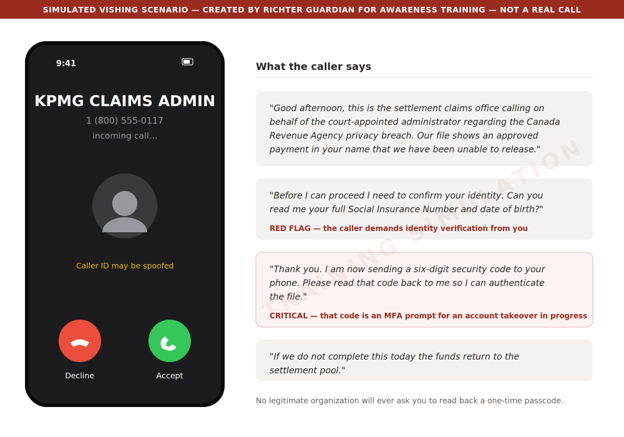
f you receive a call from someone purporting to be technical support or receive a pop-up regarding the safety of your device and you are unsure, call us to help you determine the legitimacy of their communication.

Ready to stay protected from digital threats, with experienced professionals overseeing your security?

Request a private consultation to find out whether Richter Guardian is a good fit for you.

Have questions after reading?

If something you’ve read raises a concern, our team can help you understand how it applies to you. Richter Guardian provides ongoing monitoring and expert support for individuals, families, and leadership teams.

  • Clear visibility into personal digital risk
  • Guidance from experienced cybersecurity professionals
  • Support designed for both private clients and enterprise leadership
Have questions after reading?