Protecting Against Technical Support Fraud

Introduction
Cyber criminals have been carrying out technical support scams for over a decade. As technology evolves, so do the techniques of fraudulent tech support scammers, making it difficult for people to discern whether the technical support team they’re speaking to is legitimate. Technical support scams are so common that the FBI’s Internet Crime Report of 2022 reported that ‘Tech Support Crime’ had over 30,000 recorded victims in 2022.
Summary of a technical support fraud
Technical support scammers use many different techniques to trap people and gain access to their computers and other devices. After they convince you that there is a problem, they request an exorbitant fee in return for their help. Here are two of the most common methods technical support scammers use to trick their victims:
- Phone calls, emails and text messages – Technical support scammers may call, email or send a text message and pretend to be a computer technician from Apple, Microsoft, or any well-known technology company. They will assure you that there is a problem with your computer, and request that you give them remote access to your computer to help remediate the issue.
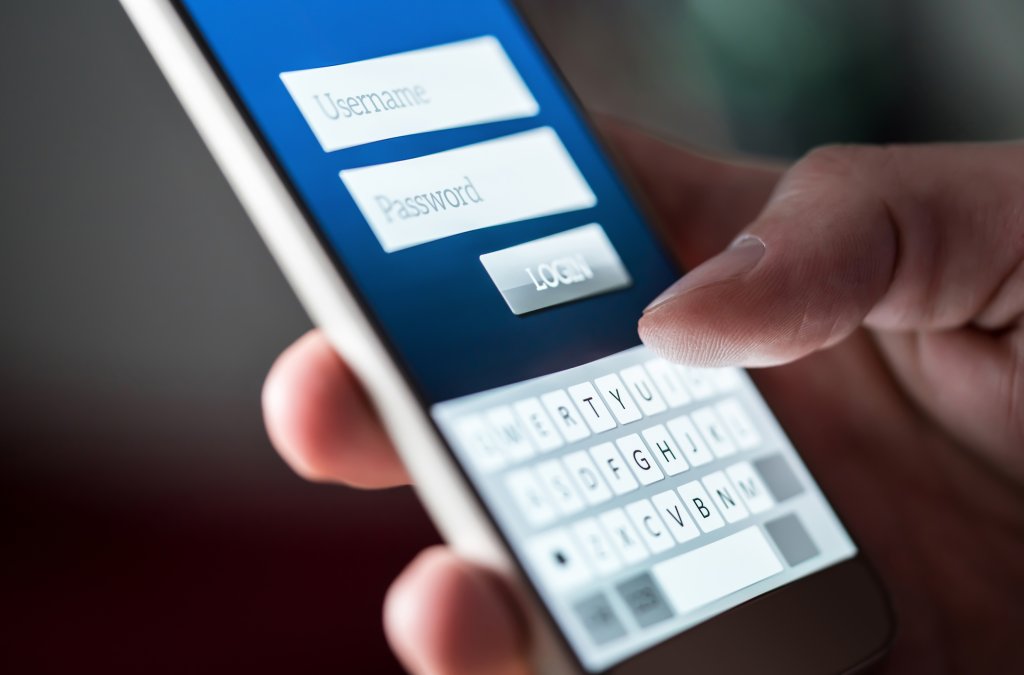
- Pop-up warnings – Technical support scammers may trick you with pop-up windows; it may look like an error or warning message from your device, and it may use similar graphics from trusted websites. The pop-up will often provide a phone number that you can call to get help. The phone number will lead to a fraudulent tech support worker.
Recommendations
- Stay Informed – Always be skeptical of unsolicited calls, emails or text messages that report a problem with your device.
- Prevent Remote Access – When a technical support scammer has you on the line, they will convince you to provide them remote access to your device in order to run diagnostic tests. Do not provide remote access to your device.
- Trust Your Instincts – If you are suspicious about an unexpected message, call, or request for personal information or money, it is safe to assume it may be a scam.
- Stay Educated – Participate in security awareness sessions provided by your Richter Guardian team, your bank or other trusted organizations.
We understand that misleading pop-ups or warnings about your device through a call can cause uncertainty. Richter Guardian’s monitoring system and concierge service can give you peace of mind.
Your onboarded mobile and endpoint devices can be monitored by us. If there is a problem with your device, we will contact you to provide specific details about any potential alerts. Our experts can help you remediate the issue.
Ready to stay protected from digital threats, with experienced professionals overseeing your security?
Request a private consultation to find out whether Richter Guardian is a good fit for you.
%20(1).png)
Protect your digital life by detecting risks before they escalate
Richter Guardian gives you enterprise-level cybersecurity tailored for individuals, families, and executives.


Related posts

Family offices exist to protect wealth, preserve privacy, and keep complex household and financial operations running without disruption.
Evidence suggests that one category of risk is consistently underestimated by family offices: the actual high-net-worth people that the office serves. This is not the type of risk that’s protected by corporate IT infrastructure.
Instead, this risk lives on personal devices, in private email and social media accounts, and across the households of the different family members.
Cybercriminals have noticed this gap and have already pivoted to actively exploit it.
The threat to family offices is personal, reputational and financial
Much of the cybersecurity conversation in wealth management has traditionally focused on institutional controls: firewalls, encrypted networks, and compliance frameworks.
Those protections absolutely matter, but they do not extend to where a significant portion of the family office risk now lives:
- A family member checking personal email or social media account on a home network.
- A family whose phone number and home address appear in a data broker database.
- A trusted assistant using a shared device.
These are not edge cases. They are common scenarios in nearly every family served by a family office — and they represent meaningful exposure that corporate IT was never designed to address.
Due to the potential for higher reward, attackers are willing to spend months studying a target through email messages, social media posts and other types of research before acting. They also often go after finances rather than reselling stolen credentials on the dark web. The threat of ongoing reputational exposure and harm are very real and effective threat techniques.
A growing increase in cyberattacks against family offices
Family offices are increasingly being targeted: 57% of North American family offices have experienced an attack in the past 12 to 24 months.
One of the most common methods is not particularly technical. Phishing and other email-based schemes are among the most prevalent and fastest-growing ways that criminals target family offices, with many of those attacks aimed at the homes of family members or employees.
More than 70% of family offices now report that the likelihood of a cyberattack has increased dramatically, according to a survey by global law firm Dentons. That figure alone should prompt a reexamination of where coverage exists — and where it does not.
What makes family offices a unique, high-value target
The answer is not complicated. Family offices manage significant assets, often with relatively lean operational teams. Personal and professional life are closely intertwined. Lastly, the people involved — principals, family members, household staff and trusted advisors — represent a wide surface of potential entry points.
With large sums of money under management, often-lax security measures, and personal and business information intermingled on family members' devices and networks, a family office presents a target-rich environment for attackers.
Reputational damage can hit as hard as financial loss. Wealthy families often have public stature and these incidents are rarely reported publicly, making the problems harder to see and track.
Cybercriminals also frequently bypass a family office’s corporate IT systems altogether. They prefer to target leaders and their families in their personal lives, where defenses tend to be weaker.
Human element is central to digital risks
Family offices often comprise individuals of different ages and digital habits:
- Younger kids and teenagers may click links or download apps without verifying their safety.
- Older generations are increasingly targeted through sophisticated social engineering campaigns.
- Both groups may be reluctant to speak up when they have been victimized, out of embarrassment.
This silence creates additional delay and heightened possibility of reputational and financial damage.
Artificial Intelligence (AI) is rapidly accelerating the problem
Cybercriminals are now using AI technologies to research, map and craft complex, drawn-out attack strategies that often include voice messages and deepfake calls.
These messages and calls can be convincing enough to make you think you are speaking to a real person — even someone you know well.
These are not abstract future threats.
They are happening now, and they are particularly effective when there is no established protocol for verifying identity under pressure.
The gap between corporate IT and a family’s personal exposure
It is worth being precise about where the coverage gap lies, because it is often misunderstood.
Most family offices have some form of IT support. What they often lack is dedicated personal cybersecurity — coverage that extends to the devices, accounts, and identities of principals and family members outside the institutional environment.
Personal devices with base-level security controls. Computers that quietly contain well-hidden malware. Data brokers who have access to compromised credentials including family members' email addresses and passwords.
These are structural gaps, not matter of individual carelessness.
The work-from-home era made this more visible.
Personal accounts, devices and computers became regular operating environments for sensitive communications, financial transactions, and professional decisions. That did not come with a corresponding upgrade in personal security posture for most households.
What meaningful family office cybersecurity protection looks like today
Extended visibility across multiple households
Risk does not stop at one individual in one family; it crosses multiple households. Every person with access to shared accounts, household computers, or sensitive communications represents a potential exposure point. Effective protection maps this landscape and monitors it across the people and devices that matter.
Clarity when something goes wrong
Human error is responsible for most cybersecurity breaches, so itis important to train family members and employees to recognize and report suspicious activity. Yet, training alone is not enough if there is no clear path forward when a concern arises.
Who do you call? What happens next? Uncertainty at that moment is costly.
This is where Richter Guardian’s human-led Cyber Defence Desk is key. Our response team is available when you want an expert answer and ongoing guidance.
Proactive identity and credential monitoring
Leaked credentials are a key initial attack vector for cybercriminals. It is critical for family offices and their customer – the family itself – to undergo regular security assessments to highlight gaps in their defenses.
Dark web monitoring and credential surveillance help surface exposure before it becomes a breach.
Richter Guardian reports on this exposure regularly through personalized insights, direct outreach and the Richter Guardian mobile app.
A clear, defined incident response path
Family offices should identify a point of contact on cybersecurity and establish an incident response plan — one that lists the steps to take in the event of an attack, including details about any cyber insurance, outside legal counsel, and other external partners or resources.
When an incident occurs, calm and structured response makes a significant difference in outcome. Richter Guardian’s Cyber Defence Desk epitomizes these attributes and can help family offices with the development of a incident response plan.
Discreet, professional support, in all circumstances
For high-profile families, how a security concern is handled can matter as much as whether it is resolved. Operational scramble, visible panic, or poor communication during an incident can amplify reputational harm.
Discreet, professional support is not a luxury — it is part of what effective protection requires.
Personal, concierge cybersecurity for family offices: The support layer that is often missing
Family office managers are frequently the people who identify these gaps and are expected to address them. This is not a small responsibility.
Coordinating protection across multiple households, family members of different ages and risk profiles, and a mix of personal and professional devices and accounts. These are aspects that require a model that most IT departments were simply not built to provide.
On the other hand, Richter Guardian was designed for exactly this context.
We provide a personal cybersecurity layer for principals and households— extending beyond corporate IT to cover the personal devices, accounts, and identities that family office systems and processes do not reach.
Our approach includes:
- ongoing proactive monitoring;
- threat and vulnerability detection;
- reputation and identity protection; and
- guided incident response delivered through a concierge model built for high-net-worth family discretion and clarity.
Ready for your family office to stay protected from digital threats, with experienced professionals overseeing personal cybersecurity?
For family office executives and managers looking to close the gap between institutional protections and personal exposure, request a private consultation to learn about where that exposure resides.

Protecting What You Can't Replace: A Data Backup Guide
Introduction
Important family, financial, and legal information is increasingly stored across devices and online accounts, making a reliable backup plan an important part of protecting it.
For many families, these types of files now exist across different devices and services, so it helps to know where those files are stored, how they can be recovered, and what their risks are.
For high-net-worth individuals, families, and executives, backups are especially important because the information they rely on is often highly valuable, private, and difficult to replace. A lost device, ransomware attack, cloud account issue, or hardware failure can quickly disrupt personal, financial, or business matters.
Having a reliable backup plan helps ensure important files remain accessible, protected, and recoverable when something goes wrong.
Common risks to your data
Data can be lost in several ways, including lost or stolen devices, ransomware, or everyday backup failures such as cloud service outages, file corruption, or hardware failure.
Lost or stolen devices
If a device is lost, stolen, or destroyed, any files stored only on that device may be permanently lost. The best protection is to keep a backup in another place, such as a cloud account or an external hard drive.
Ransomware
Ransomware is another serious risk. This type of attack locks your files and demands payment to restore access. An offline backup, such as an external hard drive, protects your files since attackers cannot access it.
Everyday backup failures
Backups can also fail for everyday reasons. Automatic backup settings may be turned off, an important folder missed, files become corrupted, or a cloud service may be temporarily unavailable. A helpful rule of thumb is to keep three copies of important data: one on your device, one in the cloud, and one on an external hard drive.
Cloud backup as a first layer of protection
Cloud storage saves your data online through a service such as Google Drive, Apple iCloud, or Microsoft OneDrive. You can access files from any device with an internet connection, and many cloud services can back up your files automatically.
Cloud services you may already use
Apple iCloud
- Included on all Apple products (iPhone, iPad, Mac)
- Can be set to automatically back up photos, videos, contacts, documents and text messages
Google Drive
- Built into many Android devices and Chromebooks through a Google account
- Windows and Mac users need to install Google Drive for desktop and choose which folders to sync
Microsoft OneDrive
- Built into Windows 10/11 and included with Microsoft 365 subscriptions
- Can be set to automatically back up your Desktop, Documents, and Pictures folders
Using cloud backup securely
- Start by confirming that cloud backup is turned on for each device and the right files and folders are included.
- Check that recent files are being backed up and that you have enough storage for the information you want to protect.
- Protect every cloud account with a strong, unique password and multi-factor authentication.
Since cloud backups can sync unwanted changes, including ransomware-encrypted files, cloud backup should be paired with an offline backup that is disconnected when not in use.
Using a hard drive as an offline backup
An external hard drive provides an extra layer of protection if something goes wrong with your device or cloud account.
To use an external hard drive, connect it to your computer, copy your important files, and disconnect it once the backup is complete.
For added safety, store the drive in a secure location away from your main devices. A safety deposit box or personal safe is the most secure option.
A good place to start
- Identify the files that would be hardest to replace, such as legal documents, financial records, tax documents, insurance information, and family photos.
- Confirm cloud backup is turned on and includes those files.
- Protect cloud accounts with strong passwords and multi-factor authentication.
- Copy important files to an external hard drive and disconnect when finished.
- Store the hard drive somewhere safe, and separately from your main devices.
- Test your backups periodically to make sure the files can be recovered.
If you’re a Richter Guardian client and have questions about securing your backup accounts, multi-factor authentication, protecting your devices from ransomware, or improving your overall device backup strategy, please contact our team.
Ready to stay protected from digital threats, with experienced professionals overseeing your security?
Request a private consultation to find out whether Richter Guardian is a good fit for you.
Understanding Mythos AI: What It Means for Your Digital Security
Introduction
Anthropic's Claude Mythos is an advanced AI model currently available only to a select group of vetted technology companies, not the general public. While it holds significant promise as a defensive tool, capable of uncovering security flaws before criminals can exploit them, the same capabilities could be misused to lower the effort needed to exploit weaknesses in email, banking, and personal accounts.
For high-net-worth individuals, families, and executives managing significant assets, this increases the risk of targeted fraud, account takeovers, and financial loss, making strong cybersecurity practices more important than ever.
What's Mythos AI?
Claude Mythos is an advanced artificial intelligence model developed by Anthropic, the company behind the widely used Claude AI assistant. It can be thought of as a much more powerful version of AI tools that many people already use for daily tasks. Mythos goes far beyond earlier models, especially in areas such as complex reasoning, software analysis, and, most importantly, the ability to identify weaknesses in computer systems.
At this time, Mythos is not available to the general public. It is still going through testing and review and has only been released in a highly controlled way to a small number of trusted organizations. These include major technology and security companies such as Microsoft, Apple, Amazon, Cisco, and CrowdStrike. This limited release is intentional. Anthropic has stated that Mythos is powerful enough to cause serious harm if misused, so they have chosen to share it cautiously and with careful oversight.
Why's everyone talking about it?
There are two main reasons Mythos is receiving so much attention. The first is concern within the cybersecurity community. Mythos represents a major step forward in what AI can do when applied to computer systems. Security professionals worry that existing defense tools and practices have not yet caught up. There is also concern that criminals could use tools like Mythos to make cybercrime faster, cheaper, and easier to carry out.
The second reason is business momentum. Every major AI announcement attracts investors and increases public interest. This often raises the perceived value of companies such as Anthropic, OpenAI, and Google. As a result, Mythos has become not only a security issue, but also a financial and market-driven story.
It is important to understand that Mythos is not an isolated development. Other companies, including OpenAI and Google, have already released AI models with similar cybersecurity-related capabilities, though generally at a lower level. What makes Mythos different is how quickly and efficiently it operates, as well as Anthropic’s openness in discussing both its potential benefits and its risks.
How does this affect you?
Mythos does not create entirely new types of cyber threats. Instead, it significantly lowers the level of skill, knowledge, and time needed for attackers to exploit existing weaknesses. These weaknesses exist in the everyday technology we all rely on, including phones, laptops, email systems, and banking or investment applications.
Cyberattacks that once required a team of highly skilled hackers may soon be possible for a single individual using AI tools. For individuals and families with significant financial assets, sensitive personal communications, or access to influential networks, this increases risk. The most common and serious threats remain personal email compromise, fraudulent wire transfers, and targeted account takeovers.
How you can keep safe
Regularly review your digital access points
Make sure all important accounts, such as banking, email, and investment platforms, use strong, unique passwords, and enable multi-factor authentication wherever it is available. In addition, use credit monitoring services to help detect fraud, unauthorized accounts, or identity misuse as early as possible.
Be cautious with unexpected messages
AI can now generate very realistic phishing emails, texts, and phone messages. If something seems unusual or urgent, verify it through a separate and trusted method before taking action.
Confirm your advisors are prepared
Organizations that manage your assets should be reviewing and strengthening their cybersecurity controls, including how sensitive data is protected and how fraud risks are managed.
Richter Family Office supports high‑net‑worth families and executives by integrating cybersecurity and risk considerations into wealth management, governance, and operational oversight.
Contact us with any concerns
Richter Guardian is actively monitoring developments related to Mythos AI and other emerging cyber risks. We will continue to share updated guidance as the situation evolves.
Ready to stay protected from digital threats, with experienced professionals overseeing your security?
Request a private consultation to find out whether Richter Guardian is a good fit for you.

.png)