Insights on digital risk and
personal security
Digital risk is evolving quickly. For individuals and families with greater public presence, professional responsibility, or complex personal lives, digital exposure is often higher. The impact of a security incident can extend beyond inconvenience to affect privacy, reputation, and financial well-being.
%20(1).avif)
%20(1).png)
Featured articles
A small selection of articles that help readers stay informed about personal and executive digital risk.

BMO Scam Highlighting Vulnerabilities in Two-Factor Authentication
Introduction
A recent article published by CBC news highlighted a concerning scam that involved the Bank of Montreal (BMO). The scam managed to exploit vulnerabilities associated with the two-factor authentication (2FA) system of the bank. This advisory aims to provide an overview of the issue, its implications, and recommendations.
Summary of the Incident
The scam primarily targeted customers with lines of credit. Perpetrators pose as bank employees and use a combination of phishing techniques and flaws in the 2FA process to gain unauthorized access to customers’ accounts, subsequently making unauthorized transactions.
Implications
- The trustworthiness of 2FA is at stake. Customers generally perceive 2FA as a robust security measure, but this incident underscores potential vulnerabilities.
- The scam demonstrates that even with the second layer of authentication, user accounts can be compromised if the process isn’t foolproof.
- Potential loss of customer trust in banking institutions due to such vulnerabilities.
Recommendations
- Stay Informed: Regularly update oneself about the latest scams and phishing techniques. Always be skeptical of unsolicited calls or emails asking for personal or banking information.
- Use Advanced Security Features: Wherever possible, use advanced security features like biometric authentication or hardware-based security keys.
- Monitor Accounts: Regularly check bank accounts for unauthorized transactions and report any discrepancies immediately.
- Stay Educated: Participate in security awareness sessions provided by your Richter Guardian team, the bank or other trusted organizations.
How Richter Guardian can help you
While 2FA is an essential security feature, it is not infallible. Richter Guardian clients should be proactive in understanding its limitations and continuously seek ways to enhance their security posture.
- Call us anytime you are unsure. If you receive a call from someone purporting to be your bank and you are unsure, call us to help you determine the legitimacy of their communication.
- Schedule a one-on-one call with our analyst to review the two-factor authentication security measures that may be available to you through your bank.
Table 1 – Levels of two-factor authentication that may be available to protect your bank account.

Unveiling the dark side of voice-cloning artifical intelligence
INTRODUCTION
Voice-cloning AI, which is the technology that enables the replication of a person’s voice, can assist researchers with collecting and analyzing data from different languages, dialects, and accents. Voice-cloning AI is versatile and finds applications in various creative domains.
voice-cloning artifical intelligence and small businesses with voice-cloning AI. Deep learning models can now replicate the nuances, inflections, and specific characteristics of a person’s voice with just a few minutes of sample media.
IMPLICATIONS FOR FAMILIES AND SMALL BUSINESSES
While there are positive and creative uses for voice-cloning AI, it is important to be aware of the potential risks and misuse. Here are some ways in which voice-cloning AI could lead to cybercriminal activity:
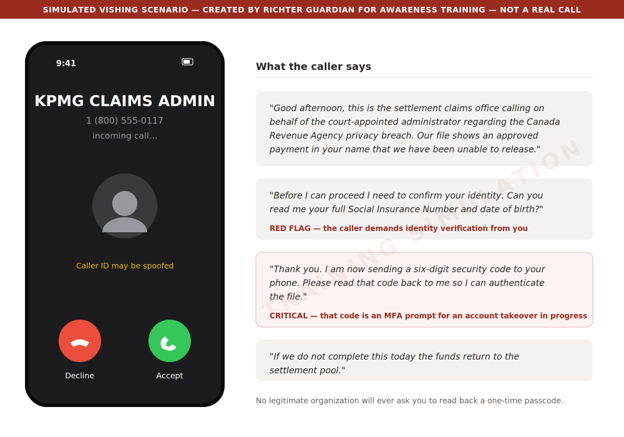
- Impersonation and Social Engineering: Cybercriminals could use voice-cloning AI to mimic the voices of individuals in positions of authority, such as company executives. In doing so, cybercriminals could instruct employees into making unauthorized transactions.
- Phishing Attacks: Voice-cloning could be used to voice-phish; individuals can be deceived into sharing sensitive information over a call.
- Extortion and Blackmail: Cybercriminals may leverage voice-cloning to create audio deepfakes of the targeted individual for the purpose of extortion or blackmail.
RECOMMENDATIONS
Given the sophistication of these threats, Richter recommends individuals and businesses to safeguard themselves by employing the following:
- Multi-factor authentication (MFA) – If you currently use voice verification as a type of authentication, ensure to include another form of verification to help safeguard against voice-cloning AI.
- Establish protocol within your small-business – Set clear protocols for financial transactions and sensitive data sharing. Keep these protocols confidential.
- Remain skeptical – Individuals should exercise caution when receiving unexpected calls, especially if the caller requests sensitive information.

What is Authorized push payment fraud?
INTRODUCTION
Authorized push payments involve an account holder granting permission to their bank or payment service to transfer funds directly from their account to another account. The payer usually triggers this transaction using services like online banking, phone banking, or peer-to-peer payment platforms.
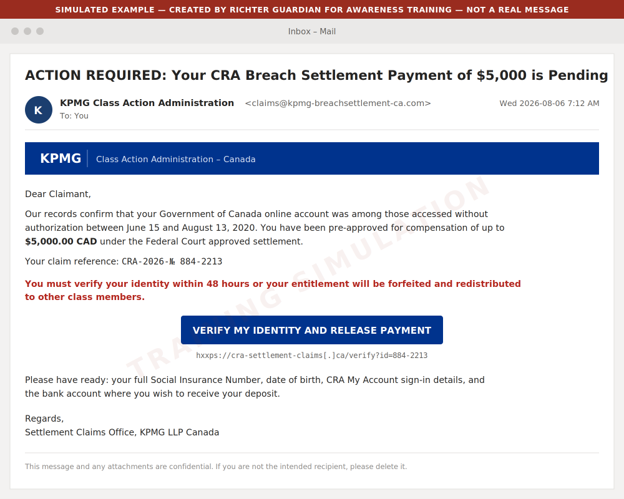
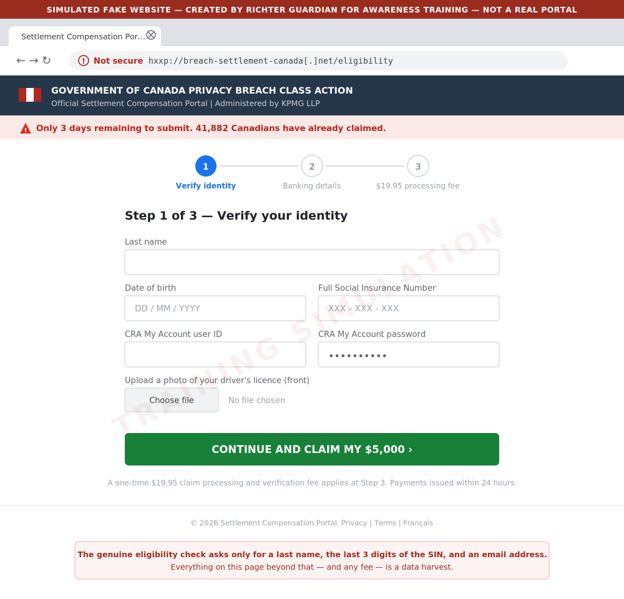
Authorized push payment (APP) fraud, also known as bank transfer scams or authorised bank transfer fraud, occurs when a victim is tricked into authorizing a payment to an account controlled by a scammer.
Unlike unauthorized transactions where a fraudster gains access to someone’s account without permission, in APP fraud, the victim is deceived into willingly making the payment, often believing they are paying a legitimate entity or individual.
HOW DOES APP FRAUD HAPPEN?
Authorized push payment fraud can happen in various ways.
- Advance Fee Scams: The victims are asked to pay a fee to access a service or a prize, which are never delivered. For example, a scammer may impersonate a lottery organization, and will withhold the prize until an administrative fee is paid. When the payment is made, the victim never receives the reward.
- Impersonation: The scammer poses as a trusted entity, such as a bank, government agency, utility company, or even a friend or family member, and requests payment for a fake invoice, overdue bill, or urgent situation.
- Fake Services or Goods: The victim pays for goods or services that are never delivered or are significantly different from what was advertised. The scammer may set up a fake online store, auction, or classified ad to lure victims.
- Social Engineering: The scammer manipulates the victim through psychological tactics, exploiting emotions like fear, urgency, or greed to coerce them into making the payment.
- Business Email Compromise (BEC): Scammers compromise email accounts of businesses or individuals, or create lookalike accounts, and use them to request payments from employees, clients, or partners, often by impersonating company executives or vendors.
- Invoice Fraud: The scammer pretends to be a vendor and sends fake invoices to the business. The invoice may request payment for goods or services that were never delivered.
PREVENTION
We recommend the following measures to mitigate the risks of authorized push payment fraud.
- Verify the authenticity of requests for payments – ensure that the request for payment is legitimate by confirming the identity of the individual, organization or service you are initiating a payment for. If the payment is sent to an organization, check the organization’s website and contact their phone number to confirm the request.
- Establish payment protocols – establish clear protocols within your organization that outline how to properly authorize payments. Ensure relevant employees are aware of these protocols and procedures.
- Monitor transactions – check your accounts to identify any unusual activity that could indicate fraud.
HOW RICHTER GUARDIAN CAN HELP YOU
To combat APP fraud, it’s essential for individuals and businesses to remain vigilant and verify the authenticity of requests for payments. We understand that It can be difficult to approach this alone.
- Call us or send us an email at: +1 844-908-3950 and support@www.richterguardian.com if you are unsure. Connect with our cyber concierge to verify the legitimacy of a situation.
- Transunion identity protection is included on our platform. Transunion identity protection will alert you of any unusual activity on your credit monitoring report that could indicate fraud.

Travelling and Social Media – How To Keep Safe
INTRODUCTION
It’s natural to want to capture the moments from your special vacations and share them on platforms like Facebook and Instagram with family and friends. However, posting these photos while you are still on your trip can expose you to various cybersecurity risks. Cybercriminals often exploit social media to gather information about your travel plans, and by sharing your vacation in real time, you may unknowingly make yourself a target.
HOW TO ENHANCE YOUR SECURITY ON VACATION
By following these precautions, you can enjoy your vacation while minimizing the risks associated with social media sharing:
- Set Your Account to Private: Restrict access to your personal information by sharing only with people you know. Public settings allow anyone to view your posts, potentially putting you at risk.
- Decline Requests from Unfamiliar Individuals: Be cautious when receiving friend requests from strangers. Unfamiliar profiles might be cybercriminals in disguise, aiming to extract money or steal your identity.
- Avoid Posting Travel Details or Itineraries: Keep your travel arrangements private. Sharing confirmation numbers for hotel reservations, airline tickets, or excursions online can provide cybercriminals with valuable information they can exploit.
- Share Photos After Returning Home: Although it may be tempting to post in real-time, consider waiting until you’re back home. You can still share your vacation highlights, and it’s a safer approach.
- Educate Your Children on Social Media Safety: While you might be aware of how to stay safe online, your children might not. Ensure they understand the importance of secure sharing practices during and after the trip.
HOW RICHTER GUARDIAN CAN HELP YOU
- Richter Guardian’s concierge service can help you secure your social media accounts during setup. Call us or send us an email at: +1 844-908-3950 and support@www.richterguardian.com if you need further guidance.

CrowdStrike Update Cripples Windows Systems
INTRODUCTION
On July 19, CrowdStrike released a flawed update to its Falcon sensor for Windows devices, triggering widespread system crashes. Due to a bug in the content validator and insufficient testing, the update bypassed CrowdStrike’s internal quality checks.
The update reached over 8.5 million Windows devices, resulting in an out-of-bounds memory read that caused the Falcon sensor to crash the operating system, leading to the infamous Blue Screen of Death (BSOD). The impact was severe, with enterprises across various sectors, including airports, hospitals, government agencies, media outlets, and financial institutions, experiencing critical and costly IT disruptions.
Both Windows workstations and servers were affected, leading to massive outages that incapacitated entire organizations and rendered hundreds of thousands of computers inoperable.
ROOT CAUSE
The issue stemmed from a recent update to the CrowdStrike Falcon sensor, which caused Windows systems to either get stuck in a boot loop or crash with the Blue Screen of Death. CrowdStrike acknowledged the problem and issued a technical alert, stating that its engineers had “identified a content deployment related to this issue and reverted those changes.
Despite the swift response, it took days for some organizations to restore normal operations, resulting in prolonged outages and delays. While most organizations have since recovered, the repercussions of the incident continue to unfold, with increased cybercriminal activity, loss of trust, and potential litigation.
According to a report by Guy Carpenter, the estimated insured losses from the faulty Falcon update range between $300 million and $1 billion, while CyberCube has suggested the figure could be as high as $1.5 billion.
THE IMPACT ON PERSONAL COMPUTERS
CrowdStrike warned users that cybercriminals were exploiting the Falcon outage. Phishing attempts, posing as CrowdStrike representatives, surged as attackers sought to distribute malware. A significant example involved a fake recovery manual that installed a new information-stealing malware called Daolpu. Once active, this malware harvested account credentials, browser history, and authentication cookies stored in browsers like Chrome, Edge, and Firefox.

Why Authenticator Apps Are Safer Than SMS for Login Security
INTRODUCTION
One of the best ways to add extra security to your accounts is through Multi-Factor Authentication (MFA) – this means you need more than just a user ID and password to log in. We strongly recommend using MFA for your important accounts.
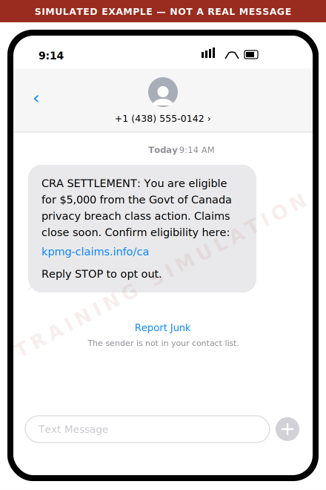
However, not all MFA methods are equally secure. Authenticator apps are a safer option than SMS authentication methods because they generate security codes directly on your device. SMS authentication codes, on the other hand, can be intercepted by hackers.
WHAT IS MULTI-FACTOR AUTHENTICATION AND WHAT IS THE BENEFIT?
MFA adds an extra step to logging in. Instead of just entering a user ID and password, you must also provide another piece of information, like a code from an app or a text message. This extra step makes it much harder for hackers to break into your account, even if they steal your password.
MFA METHOD #1: WHAT IS AN AUTHENTICATOR APPLICATION?
An authenticator app is a mobile app that generates security codes for logging in. These codes are called Time-Based One-Time Passwords (TOTP) and change every 30 to 60 seconds.
When you set up an authenticator app for an account, you scan a QR code or enter a secret key. This links the authenticator app to your account and allows it to generate matching codes.
To log in, you enter your username, password, and the current code displayed on your authenticator app. If the code matches the one your account server expects, you get access.
Some popular authenticator applications include:
- Google Authenticator
- Microsoft Authenticator
- Authy
- Duo Mobile
MFA METHOD#2: WHAT IS SMS AUTHENTICATION?
SMS authentication is when a security code is sent to your phone via text message. You enter this code along with your user ID and password to log in. These codes are One-Time Passwords (OTP) which are generated for one-time use. OTPs can last for a specified amount of time – users will need to generate a new OTP if they exceed the time limit.
Sometimes, websites may also send security codes via email instead of SMS, but the process is the same.
WHY AUTHENTICATOR APPLICATIONS ARE PREFERRED OVER SMS AUTHENTICATION
Authenticator apps provide better security than SMS codes for several reasons:
- Less chance of being hacked: Authenticator apps generate codes directly on your device, while SMS codes are sent over the internet and can be stolen.
- No risk of SIM swapping: Hackers can trick your phone provider into transferring your number to a new SIM card, allowing them to receive your SMS codes.
- No risk of interception: SMS codes can be stolen using man-in-the-middle attacks, where hackers eavesdrop on internet traffic.
- Codes change frequently: Authenticator apps refresh their codes every 30 to 60 seconds, making them harder to steal and use.
HOW HACKERS CAN STEAL SMS CODES
Here are two common ways cybercriminals can steal SMS codes:
- Man-in-the-Middle Attacks – Hackers intercept your internet traffic when you connect to an unprotected Wi-Fi network (like public Wi-Fi at a coffee shop). This can let them steal SMS codes.
- SIM Swapping – A hacker contacts your mobile provider pretending to be you and tricks them into activating a new SIM card with your phone number. Now, they receive all your text messages, including your security codes.
HOW TO KEEP YOUR ACCOUNTS SAFE
- Use an authenticator app instead of SMS authentication whenever possible.
- Protect your phone with a strong PIN or password.
- Avoid using public Wi-Fi when entering security codes.
- Never share your security codes with anyone.
- Be cautious of phishing scams that try to trick you into revealing your codes.
Latest articles
New articles and updates from the Richter Guardian team.

Protecting Our Clients with Richter Guardian
The Challenge
In our modern digital landscape, cybersecurity threats are an equal-opportunity challenge that can impact anyone, anywhere. As our world becomes more interconnected through technology, it’s crucial to recognize that cybersecurity isn’t just a concern for tech experts; it’s a shared responsibility that affects us all.
In one such case, a client found herself facing a daunting cybersecurity challenge. While browsing the internet, she received a pop-up message claiming that her computer was compromised by a virus. The message instructed her to call a specific number, which were impersonating Apple Support. Unfortunately, she fell victim to this scam, leading to a compromise of her computer.
The root cause analysis suggests that her computer might have been compromised during the installation of browser filters to block ads, where cybercriminals took possession of her computer system for 45 minutes. The client was distressed upon receiving a fraudulent invoice, wondering how this happened to her. This case study highlights the importance of cybersecurity and how Richter Guardian can offer a solution.
The Solution
Richter Guardian, a comprehensive cybersecurity service offered by Richter, was instrumental in addressing this client’s situation. When the client reached out to Richter, our team quickly assessed the situation and took immediate action.
First, we onboarded the client to the Richter Guardian service, which includes social media protection, endpoint protection for devices (laptops, desktops, and mobile devices), and monitoring for compromised credentials on the dark web. This multi-layered approach ensured comprehensive protection for the client.
In addition to onboarding the client to Richter Guardian, we conducted a thorough analysis of her compromised computer. We also extended the protection to her mobile devices, ensuring her entire digital presence was safeguarded.
Furthermore, we educated the client on cybersecurity best practices, including the importance of strong, unique passwords and the use of two-factor authentication. We worked closely with her to ensure that her online accounts and data remained secure.
The Result
The results of our intervention were significant. The client experienced several benefits from our Richter Guardian service:
Peace of Mind: The client no longer felt vulnerable to cyber threats. She gained confidence in her ability to navigate the digital landscape safely.
Device and Data Protection: All her devices, including her compromised computer, were fortified against potential threats. Her sensitive data was secure, and she no longer worried about cyberattacks.
Reputation Protection: Richter Guardian helped protect her online reputation by proactively monitoring for impersonation attempts and taking swift action to remove any fraudulent accounts.
Educational Insights: The client received valuable insights and recommendations to enhance her cybersecurity awareness. She learned how to recognize potential threats and avoid falling victim to scams in the future.
Is Richter Guardian right for you?

Toyota Confirms Ransomware Attack, Data Breach
Introduction
Toyota Finance Services (TFS), a subsidiary of the well-known automaker, has confirmed that they were hit with a ransomware attack. TFS detected unauthorized access to some of its systems in Africa and Europe after cybercriminals claimed an attack on the company. The cybercriminals, also known as the Medusa ransomware gang, claims responsibility for the attack.
Summary Of the Incident
The Medusa ransomware gang had listed ‘Toyota Financial Services’ to its data leak site on the dark web and demanded a ransom payment of $8,000,000 to delete allegedly stolen data. The cybercriminals published sample data that included financial documents, hashed account passwords, passport scans, etc. to prove the intrusion. As of right now, the incident is limited to Toyota Financial Services Africa & Europe. A spokesperson announced that the process of bringing their systems back online is already underway.
How to Stay Safe
- Reset All Passwords – If you are reusing passwords across different websites, reset those passwords and employ hard-to-guess, complex passwords on those websites.
- Password Manager – To keep track of your complicated passwords, think about investing in a password manager. Password managers, like 1Password, place a secret key on your password manager to add a unique extra layer of security.
How Richter Guardian can help you
Richter Guardian can help you determine if some of your user accounts were involved in a previous breach:
- Our platform can determine compromised credentials through comprehensive dark web monitoring.
- Call us or send us an email at: +1 844-908-3950 and support@www.richterguardian.com if you are unsure about a situation.

Using AI Tools Securely: ChatGPT, Gemini, and More
INTRODUCTION
AI-powered tools are now integrated into various platforms, from office software and operating systems to image editors and chat applications. But how can you use ChatGPT, Gemini, DeepSeek, and other AI-powered tools without compromising your digital security?
AVOID SHARING SENSITIVE INFORMATION WITH AI CHATBOTS
OpenAI’s privacy policy indicates that user data may be utilized to enhance AI performance. When using services like ChatGPT, Sora, or Operator, your interactions could be used to train AI models.
According to a study done by Harmonic Security, 8.5% of prompts contained sensitive information.
Never input sensitive personal information such as passwords, passport or banking details, addresses, phone numbers, names, or any confidential business data. If necessary, replace sensitive details with placeholders like asterisks or “REDACTED.”
For professionals, especially software engineers leveraging AI for code review, it’s crucial to strip out any information that could reveal company secrets and/or application structure.
Everything shared with an AI chatbot has the potential to be stored and analyzed.
FREE AI SERVICES COME WITH HIGHER RISKS
Many free-tier AI tools explicitly state that they train on user data. Organizations using AI should consider investing in paid AI services like ChatGPT Enterprise, which ensures that user inputs and outputs are not utilized for training purposes.
Experts recommend paid plans as a more secure option for businesses looking to mitigate risks.
BEST PRACTICES FOR SAFE AI USE IN THE WORKPLACE
For businesses looking to integrate generative AI tools while minimizing security risks, Harmonic Security suggests shifting away from outright bans and instead implementing effective AI governance strategies. These include:
- Establishing clear AI usage policies and enforcing workflows.
- Monitoring AI tool usage in real time to track inputs and ensure compliance.
- Restricting the use of free AI tools that train on input.
- Classifying sensitive data to prevent exposure.
- Educating employees on responsible AI use and associated risks.
HOW CAN RICHTER GUARDIAN HELP YOU?
Richter Guardian can provide solutions to enhance your cyber hygiene, reducing the risk of data breaches and security threats when using AI tools. By following our recommended practices, individuals and organizations can leverage AI safely while protecting their sensitive data.

23andMe User Data Stolen in Credential Stuffing Attack
Introduction
The public biotechnology and genomics firm, 23andMe, confirmed on their website on October 6, 2023, that certain 23andMe customer profile information was circulating on hacker forms. The information that has been exposed from this incident includes full names, usernames, profile photos, sex, date of birth, genetic ancestry results, and geographical location. As a result, 23andMe have notified their customers, and have pushed for them to reset their passwords and enable multi-factor authentication (MFA).
How the Attack Happened
The hackers used credential stuffing to gain access to a set of user accounts on 23andMe. Credential stuffing is a type of cyber attack in which a hacker uses stolen usernames and passwords (obtained from another breach or purchased off the dark web) to access other websites in which the users are registered. Users that recycled their breached login credentials on 23andMe may have been the entry point for this attack.
A subset of the compromised users opted into 23andMe’s DNA Relatives feature, which allowed for hackers to scrape the data of their DNA Relative matches.
The number of accounts affected has not been released or disclosed by 23andMe.
If you think you may have been affected by this recent breach, reset your password, and opt for MFA on 23andMe. While the account may or may not be compromised, it is important that cybercriminals do not leverage your breached credentials to access other websites in which you may have an account on.
How to Stay Safe
- Reset All Passwords – If you have the bad habit of reusing passwords across different websites, reset those passwords and employ hard-to-guess, complex passwords on those websites.
- Password Manager – To keep track of your complicated passwords, think about investing in a password manager. Password managers, like 1Password, place a secret key on your password manager to add a unique extra layer of security.
How Richter Guardian can help you
Richter Guardian can help you determine if some of your user accounts were involved in a previous breach:
- Our platform can determine compromised credentials through comprehensive dark web monitoring.
- Call us or send us an email at: +1 844-908-3950 and support@www.richterguardian.com if you are unsure about a situation.
Sources
- “Addressing Data Security Concerns”. 23andMe. 2023 October 6. Retrieved 10 October 2023.

Check-In Safely – Phishing Campaigns Target Hotels and Travel Agencies
Introduction
The tourism industry is crawling back to pre-pandemic numbers thanks to travel and lockdown restrictions being lifted globally. Unfortunately, cybercriminals have also come up with a new and sophisticated campaign to breach the systems of booking sites, hotels, and travel agencies. Subsequently, the cybercriminals use the systems of the compromised hotel or travel agency to send phishing emails to existing customers.
Summary of Hotel and Travel Agency Phishing Scam
- The Entry Point – The campaign starts with the threat actor inquiring about a reservation with the hotel or travel agency. Upon booking the stay, the threat actor uses ‘advanced social-engineering techniques’ to inquire about specific or special accommodations.
- Tricking Employees – After establishing a sense of urgency with the hotel employee, the threat actor sends over a URL via email, which supposedly contains crucial documents relevant to their accommodations. The URL provided directs the hotel employee to a genuine hosting site (Google Drive, Dropbox, etc.) and the hotel employee downloads an archive file thinking that it contains important documents.
- Malicious Executables – The archive file that was downloaded by the hotel employee contained malicious executables (malware) that would infiltrate the hotel employee’s computer. From there, the malware operates stealthily to capture login credentials, financial information, and other sensitive data without the hotel employees being aware.
- New Target – Once threat actors have successfully compromised the hotel’s system, the threat actors can move onto using the hotel’s communication channel to target legitimate customers.
- Phishing – The threat actors can now send phishing messages disguised as legitimate requests from the compromised hotel or travel agency. The phishing messages will ask for additional credit card verification from the customer. Since the message comes directly from the booking site through a legitimate communication channel, the customer has no reason to doubt the legitimacy of the email.
How to Stay Safe
- Avoid Clicking on Unsolicited Links – Always be skeptical of unsolicited links, even when they originate from a trusted source. Check URLs for any indicators of deception.
- Take Your Time – Threat actors, phishing emails, and sketchy requests for payments will typically call for immediate action. Take your time to discern any emails that require you to transfer sensitive information.
- Trust Your Instincts – If you are suspicious about a suspicious email, call the hotel or travel agency directly to confirm that the communication is indeed legitimate.
How Richter Guardian can help you
Richter Guardian can help you navigate complex phishing scams:
- Your onboarded mobile and endpoint devices are protected; the protection service can detect suspicious links and will work to block insecure websites.
- Call us or send us an email at: +1 844-908-3950 and support@www.richterguardian.com if you are unsure about an email or situation. Call us to help you determine the legitimacy of their communication.

AnyDesk reports that hackers infiltrated its prodution servers and initiated password resets
INTRODUCTION
On February 2, 2024, AnyDesk confirmed a recent cyberattack that resulted in hackers gaining access to the company’s production systems. The breach involved the theft of source code and private code signing keys.
AnyDesk is a widely used remote access solution that is popular among enterprises for remote support and accessing colocated servers.AnyDesk became aware of the attack after they detected an incident on their production servers. Following a security audit, they identified a compromise on their systems and implemented a response plan in collaboration with CrowdStrike.
Following the disclosure of the breach, cybersecurity company Resecurity promptly announced that an individual is attempting to vend the credentials of over 18,000 AnyDesk customers on a well-known cybercrime forum. The seller is seeking $15,000 in cryptocurrency for the compromised credentials.
IMPLICATIONS AND RECOMMENDATIONS
Although AnyDesk claims that passwords were not stolen in the attack, the threat actors still managed to successfully breach their production systems.
- If you use AnyDesk, modify your password.
- If the same password for AnyDesk is employed on other platforms, modify your password on those platforms aswell.
HOW RICHTER GUARDIAN CAN HELP YOU
- Our platform includes dark web monitoring – a service that can determine whether compromised credentials have been found on the dark web.
- Call us or send us an email at: +1 844-908-3950 and support@www.richterguardian.com if you are unsure. If you receive a call from someone purporting to be technical support or receive a pop-up regarding the safety of your device and you are unsure, call us to help you determine the legitimacy of their communication.

Protecting Against Technical Support Fraud
Introduction
Cyber criminals have been carrying out technical support scams for over a decade. As technology evolves, so do the techniques of fraudulent tech support scammers, making it difficult for people to discern whether the technical support team they’re speaking to is legitimate. Technical support scams are so common that the FBI’s Internet Crime Report of 2022 reported that ‘Tech Support Crime’ had over 30,000 recorded victims in 2022.
Summary of A Technical Support Fraud
Technical support scammers use many different techniques to trap people and gain access to their computers and other devices. After they convince you that there is a problem, they request an exorbitant fee in return for their help. Here are two of the most common methods technical support scammers use to trick their victims:
- Phone calls, emails and text messages – Technical support scammers may call, email or send a text message and pretend to be a computer technician from Apple, Microsoft, or any well-known technology company. They will assure you that there is a problem with your computer, and request that you give them remote access to your computer to help remediate the issue.
- Pop-up warnings – Technical support scammers may trick you with pop-up windows; it may look like an error or warning message from your device, and it may use similar graphics from trusted websites. The pop-up will often provide a phone number that you can call to get help. The phone number will lead to a fraudulent tech support worker.
Recommendations
- Stay Informed – Always be skeptical of unsolicited calls, emails or text messages that report a problem with your device.
- Prevent Remote Access – When a technical support scammer has you on the line, they will convince you to provide them remote access to your device in order to run diagnostic tests. Do not provide remote access to your device.
- Trust Your Instincts – If you are suspicious about an unexpected message, call, or request for personal information or money, it is safe to assume it may be a scam.
- Stay Educated – Participate in security awareness sessions provided by your Richter Guardian team, your bank or other trusted organizations.
How Richter Guardian can help you
We understand that misleading pop-ups or warnings about your device through a call can cause uncertainty. Richter Guardian’s monitoring system and concierge service can give you peace of mind:
- Your onboarded mobile and endpoint devices are monitored by us. If there is a problem with your device, we will contact you to provide specific details about any potential alerts. Our experts can help you remediate the issue.
- Call us or send us an email at: +1 844-908-3950 and support@www.richterguardian.com if you are unsure. If you receive a call from someone purporting to be technical support or receive a pop-up regarding the safety of your device and you are unsure, call us to help you determine the legitimacy of their communication.

Demystifying TikTok's collection of your data
INTRODUCTION
TikTok’s extensive data collection, including personal information and device usage patterns, raises privacy and security concerns, particularly due to its China-based parent company, ByteDance. While some experts argue that TikTok’s data collection is not inherently malicious, others express skepticism about the transparency of its practices.
WHAT TIKTOK GATHERS FROM YOU
TikTok collects various types of information from users:
- Personal Data: Tiktok has access to personal data like contacts, calendars, information about which device you’re using, which operating system and your location.
- TikTok monitors the content you engage with and for how long – similar to Facebook.
- Device Usage: TikTok monitors how you use your device and how it functions, including “keystroke patterns or rhythms, battery state, audio settings and connected audio devices,”.
- Location Data: TikTok can collect precise GPS information about its users.
IMPLICATIONS OF DATA COLLECTION
Data collection by social media platforms like TikTok can pose several risky implications for everyday users:
- Privacy Concerns: Social media platforms often collect extensive personal data, including contacts, location, and browsing habits. This raises concerns about user privacy, especially if this data is shared or sold to third parties without consent.
- Targeted Advertising: User data is often used to create targeted advertising campaigns. While some users may find this convenient, others may feel uncomfortable with the level of personalization and the potential manipulation of their preferences and behaviors.
- Data Breaches: Storing large amounts of personal data increases the risk of data breaches. If a platform’s security measures are breached, users‘ sensitive information could be exposed, leading to identity theft, financial fraud, or other forms of cybercrime.
- Surveillance and Tracking: Social media platforms track users‘ online activities across different websites and devices to create comprehensive profiles. This surveillance can infringe on user privacy and autonomy, as individuals may feel constantly monitored and manipulated by algorithms.
- Political Manipulation: Social media platforms have been implicated in spreading misinformation, propaganda, and divisive content. By collecting user data and targeting specific demographics, malicious actors can exploit social media for political manipulation and influence campaigns.
HOW RICHTER GUARDIAN CAN HELP YOU
Call us or send us an email at: +1 844-908-3950 and support@www.richterguardian.com if you are unsure. Connect with our cyber concierge to verify the legitimacy of a situation.

Wyze Camera Technical Issue Granted 13,000 Users Viewing Access to Other Homes
INTRODUCTION
On February 16, 2024, Wyze Labs encountered a service outage, resulting in connectivity issues for numerous users. The disruption persisted for almost nine hours, with the cameras remaining offline during this period. Wyze Labs identified Amazon Web Services (AWS), their partner, as the source of the security outage.
While working to restore camera functionality, Wyze faced an additional security concern. Some users reported encountering incorrect thumbnails and Event Videos in their Events tab. Disturbingly, unauthorized individuals could enlarge images or view videos from strangers’ Wyze cameras. 13,000 users inadvertently gained surveillance access to other homes.
Although the company released a statement that over 99.75 percent of Wyze’s user base remained unaffected by the breach, 0.25 percent still experienced a serious violation of their privacy.
In response to this incident, Wyze has implemented an additional layer of verification for users seeking access to video content via the Events tab, aiming to prevent such privacy breaches in the future.
RECOMMENDATIONS
Major professionally monitored security systems, like Wyze, are not perfect. Home security cameras are understandably used in many homes to enhance safety and security. If you own and/or use a security camera, it’s important to be aware of the risks associated with these devices. Follow these steps to ensure you are protected:
- Regularly update camera firmware as home security cameras can be vulnerable to hacking, which may lead to unauthorized access to your device.
- Use strong and unique passwords and enable two-factor authentication. Many cameras come with default passwords that are easily guessable, making them vulnerable to hacking. Change the default password to something strong and unique.
- Avoid placing cameras in sensitive areas like bedrooms and bathrooms.

SMS Phishing Scams Targeting Road Toll Payments
INTRODUCTION
A wave of SMS phishing attacks targeting Canadians with lures regarding unpaid road toll fees have been rolling out since the beginning of the year. 407 ETR has been warning customers to beware of fraudulent texts impersonating the company. The message is designed to deceive people into clicking on a malicious link, which would leave people vulnerable to personal data theft.
HOW TO SPOT A REAL MESSAGE
407 ETR will use specific communication methods to interact with customers that use the express toll route. If you are a customer that uses the 407, take note of these legitimate communication channels:
- 407 ETR sends payment reminder text messages from a six-digit short code. Messages don’t contain any personal or account information and include a link to their secure payment web page. Their texts will never include a direct link to pay.
- 407 ETR makes outbound automated payment reminder calls. These calls will not ask you for your personal information.
- 407 ETR will only send emails from info@407etr.com or communications@407etr.com. Ensure that the emails you receive do not have spelling errors.
HOW RICHTER GUARDIAN CAN HELP YOU
- Call us or send us an email at: +1 844-908-3950 and support@www.richterguardian.com if you are unsure. Connect with our cyber concierge to verify the legitimacy of a situation.
- Transunion identity protection is included on our platform. Transunion identity protection will alert you of any unusual activity on your credit monitoring report that could indicate fraud.
%20(1).png)
Have questions after reading?
If something you’ve read raises a concern, our team can help you understand how it applies to you. Richter Guardian provides ongoing monitoring and expert support for individuals, families, and leadership teams.
- Clear visibility into personal digital risk
- Guidance from experienced cybersecurity professionals
- Support designed for both private clients and enterprise leadership
%20(1).avif)
.png)